

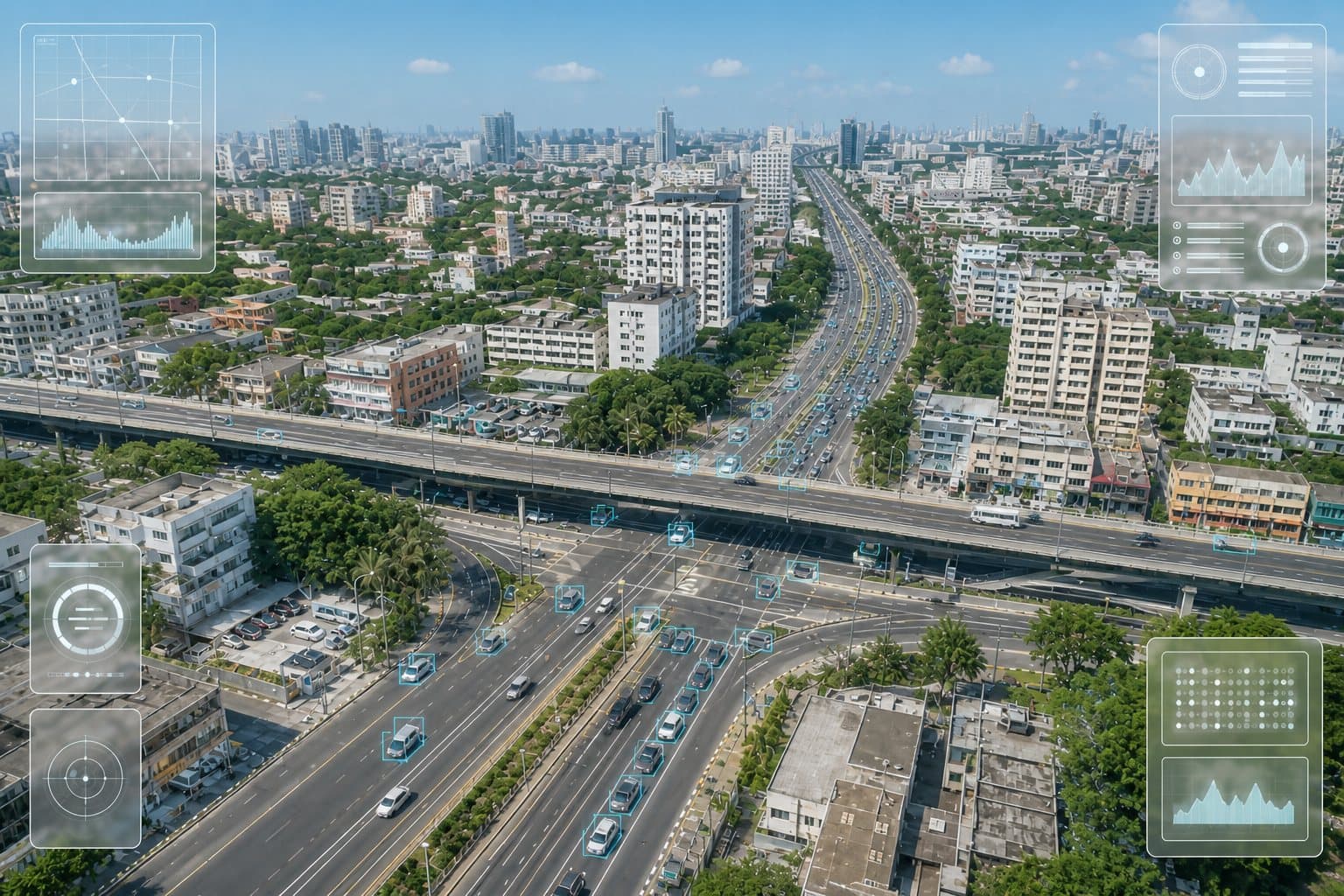
Smart Cities
Smart Cities AI Solutions
A city already generates more signal than its departments can read. NGSPURS turns existing surveillance, traffic and utility infrastructure into a working command centre — enforcement that closes, utilities that report themselves, and a citizen grievance that has an owner and a clock.
- ANPR and ATCC
- Challan lifecycle
- Utility telemetry
- Grievance SLA tracking
Typical outcome
Live0.4x
increase in enforcement notices that actually reach closure
- cameras integrated per command centre
- 0+cameras integrated per command centre
- plate read accuracy in night conditions
- 0%plate read accuracy in night conditions
- operating from one shared picture
- 0 deptsoperating from one shared picture
What your current process cannot see
Cities rarely lack cameras or data. They lack the connective tissue that turns an observation into an outcome somebody owns.
Violations are seen but never closed
A camera catches the offence, a notice is generated, and then the trail goes cold somewhere between the RTO record and the citizen's letterbox.
Departments cannot see each other's picture
Traffic, water, sanitation and police each hold a fragment. The incident that needs three of them together is the one that gets handled by none.
Utility losses are estimated, not measured
Non-revenue water and unmetered supply are booked as a percentage in a budget line because nobody has the telemetry to locate them.
Grievances have no clock
A complaint enters a register and leaves it when someone remembers. Without an SLA and an owner, the citizen's only escalation path is a local politician.
One command centre the departments actually share.
Same cameras. Different outcome.
The infrastructure does not change. What changes is whether anything is watching it, and whether what it sees reaches the person who can act.
- Cameras recording without automated detection
- Challans generated but rarely recovered
- Each department on its own disconnected system
- Utility loss estimated in a budget line
- Grievances tracked in a paper register
- Automated violation detection across the corridor
- Challan lifecycle tracked to payment or escalation
- One shared operating picture, role-scoped per department
- Loss located to a zone with meter-level telemetry
- Every grievance with an owner, an SLA and a status
Built for smart cities conditions
The civic stack, deployed on the infrastructure a city has already paid for.
ANPR and vehicle classification
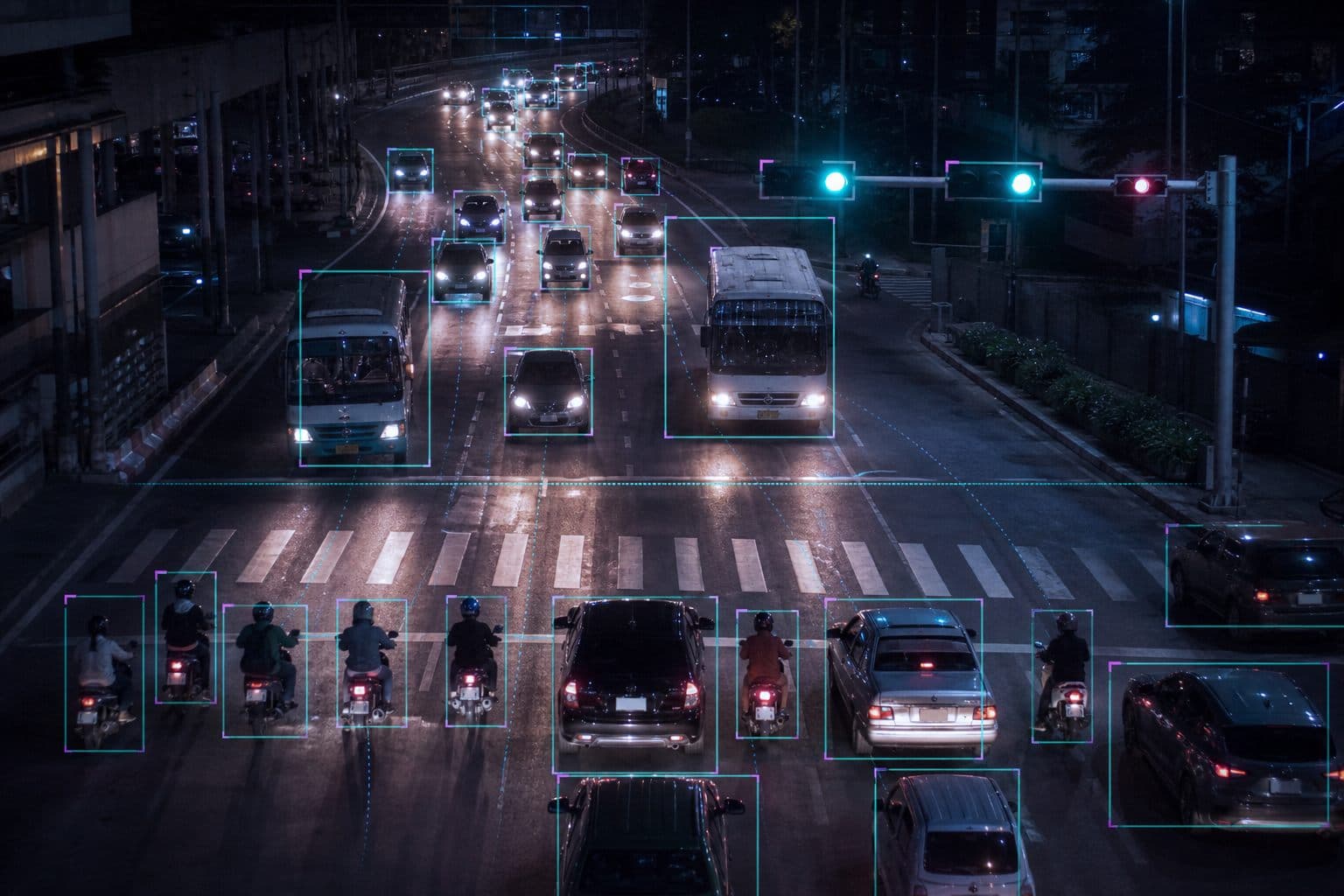
Read plates and classify vehicles across lanes at highway speed, day or night, with automatic matching against stolen and blacklisted registries.
Traffic violation and challan lifecycle
Detect red-light jumping, wrong-way driving, helmet and triple-riding offences, then track each notice through delivery, payment or escalation.
Crowd and public safety analytics
Density estimation, unusual gathering and abandoned-object detection for markets, transit hubs, festivals and processions.
Water and waste telemetry
Flow, pressure and level monitoring across the network to locate non-revenue water, plus route and bin monitoring for sanitation fleets.
Permits, taxes and revenue
Trade licences, property tax and permit workflows digitised end to end, with payment reconciliation and defaulter ageing.
Grievance and helpline routing
Citizen complaints from phone, app or walk-in routed to a department with an SLA clock, escalation ladder and closure evidence.
Detect. Understand. Act.
An alert on its own is noise. The value is in what happens between the event and the fix — and that is the part most systems leave to you.
01 — Detect
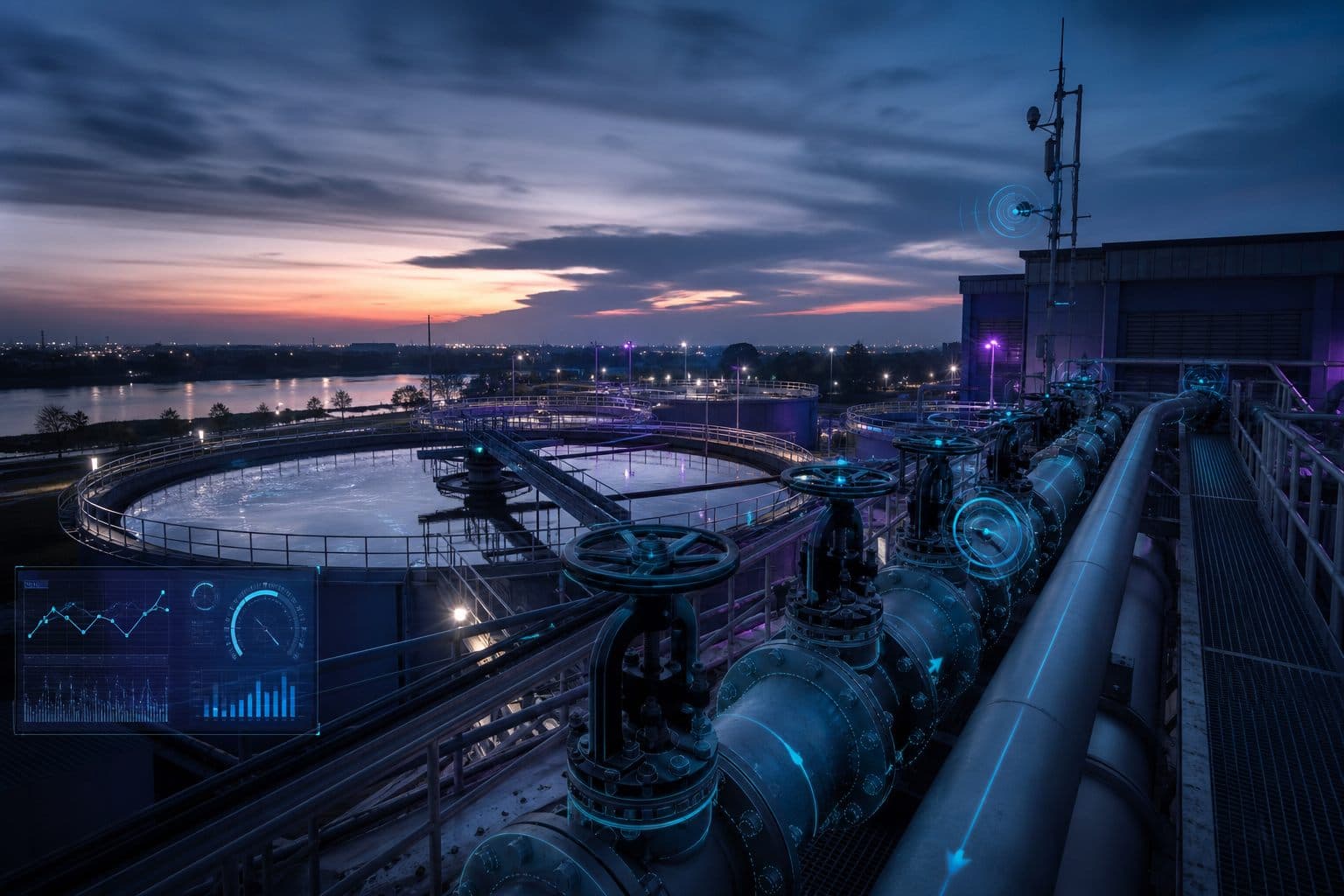
Pressure drops in the Zone 7 main at 04:15
Flow at the inlet holds steady while pressure downstream falls. No citizen has called yet because most of the ward is asleep. The anomaly is raised against the zone, not the whole network, so the crew knows where to look.
Event stream
LiveRed-light violation captured
MG Road junction
02 — Understand
The third drop this fortnight, always after a tanker fill
Correlated against the pumping schedule, the drops line up with tanker-filling operations at the same standpost. This is not a burst pipe. It is an unmetered draw that has been booked as non-revenue water for two years.
03 — Act
A meter, a route change and a recovered line item
The standpost gets metered, tanker filling moves to a scheduled window, and the ward's non-revenue water figure drops by a number the commissioner can put in a budget review — with the telemetry to defend it.
One deployment, three different jobs
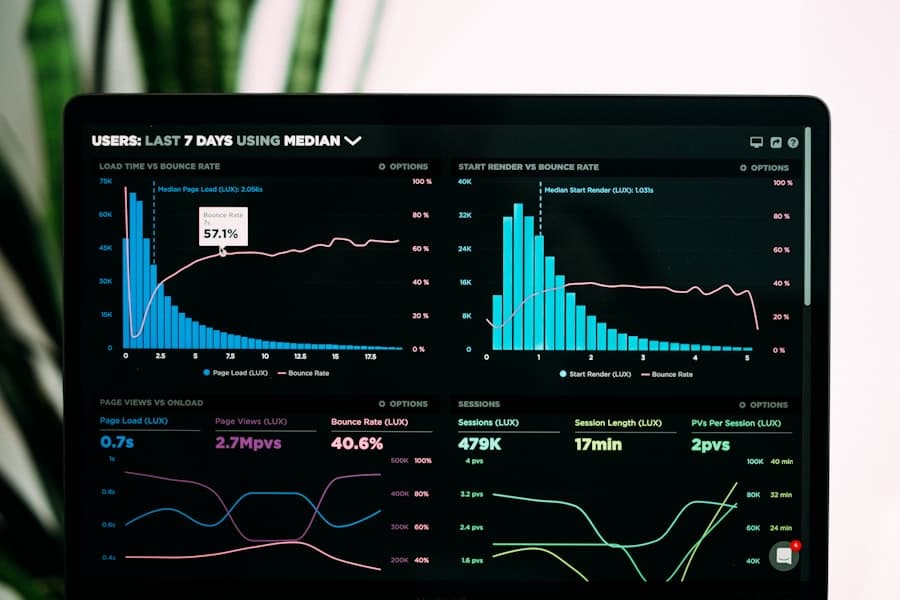
The same data, presented for the decision each role actually has to make. Nobody should have to read a safety dashboard to find a maintenance answer.
What we deploy in smart cities




The questions we actually get asked
What smart cities teams want to know before they commit to a pilot.
Together, let’s shape
The future of operational AI
Products that see the floor, move the field, and brief the board.
Book a working session